
ISRO has issued an Announcement of Opportunity, inviting Indian scientists and researchers to submit proposals for accessing data from its XPoSat Mission. Launched in January 2024, XPoSat is India's first satellite dedicated to X-ray polarimetry measurements, designed to study extreme astronomical X-ray sources like black holes and neutron stars, thereby enhancing understanding of celestial emissions.

The appointment comes as Agnikul prepares for Mission 02, a flight that will attempt, for the first time on Indian soil, the recovery of an orbital-class rocket booster and the extension of a rocket's upper stage into an on-orbit platform.

India's 500 MWe Prototype Fast Breeder Reactor (PFBR) at Kalpakkam in Chennai has achieved first criticality, marking a significant advancement in the country's nuclear energy capabilities and long-term energy security.

In many ways, this is only the beginning -- of a new chapter in India's nuclear story, and of a future where its vast thorium reserves could finally power its ambitions.

Take the Rediff Business Quiz and find out how much you know about the CEOs and their nicknames.
Russia could launch cooperation with India in building fast-neutron nuclear reactors, if sanctions against New Delhi were lifted, the top Russian nuclear agency said.

Researchers from the Indian Institute of Astrophysics (IIA) have discovered an unexpectedly high abundance of germanium in the Extreme Helium star A980, challenging existing theories about stellar chemistry and the evolution of rare stars.

In an bizzare suggestion to crack down on terrorism, a former British Labour defence minister has suggested to drop a neutron bomb on the Pak-Afghan border for creating an impassable barrier between the two countries.

'He was deeply committed to nurturing young talent and encouraging interdisciplinary collaboration.'
'The very fact that his autobiography is called India Rising is a correct example of his wish for India to be a developed country and do as best as possible by science reaching to the common people.'

XPoSat or X-ray Polarimeter Satellite is India's first dedicated polarimetry mission to study various dynamics of bright astronomical X-ray sources in extreme conditions.

India on Tuesday said cooperation in peaceful uses of nuclear technology is an important pillar of the multifaceted cooperation with Russia, which offered help in building small tropical nuclear power stations.
The Indian Space Research Organisation (ISRO) is set to welcome the new year with the launch of its first X-Ray Polarimeter Satellite that would offer insights into celestial objects like black holes, onboard a Polar Satellite Launch Vehicle rocket on Monday.

The LIGO announcement -- which confirmed, among other things, that gold, platinum and other heavy metals were products of neutron star collisions -- came just before Subrahmanyan Chandrasekhar's 107th birthday.
"Managers must walk around with a can of fertiliser in one hand and a watering can in the other."

'The steady poverty reduction achieved over the last three decades could be largely reversed in this one financial year with hundreds of millions sliding below the red line,' warns Devangshu Datta.

Welch, who was named "Manager of the Century" by Fortune magazine in 1999, massively increased the financial might of GE by nearly fivefold to USD 130 billion during his time. The market value of the stock rose from USD 14 billion to more than USD 400 billion, an increase of more than 2,700 per cent, during the 20 years he was CEO.
Apsara will be shifted outside the BARC complex even if the N-deal does not work out.
The Kudankulam Nuclear Power Plant will attain criticality by mid-night on Saturday, Atomic Energy Commission Chairman S K Sinha announced in Tirunelveli.

Even after five decades of use, the telescope at Ooty that Dr Govind Swarup designed and built continues to be the largest single frequency radio telescope in the world.

China's National Space Administration landed the Chang'e 4 lunar probe at 10:26 am Beijing time on Thursday, in the South Pole-Aitken Basin which is an impact crater, China Central Television reported.

The reactor will start its initial production of 400 MW electricity within 20 days, Union Minister V Narayanasamy said.

India's observatory will be the fourth in space, after the Hubble, Russia's Spektr R and Suzaku of Japan.

If the gas ball is the result of a supernova, then it's the most powerful supernova ever seen.

'Large-impact aerial weapons have no use against dictator regimes or terrorist entities,' says Group Captain Murli Menon (retd).

Prathmesh Kher/Rediff.com recalls how a planetary mission became interstellar in scope with the addition of a simple gold-plated disk.

Those worried say Kakrapar was lucky to have witnessed leakage of heavy and light water from the coolant channel without any serious damage to fuel bundles in the reactor.

International scientists said they have glimpsed the first direct evidence of gravitational waves, which Albert Einstein predicted a century ago.

Indians are welcome to study and work in Great Britain, says UK's Minister for Science and Universities Jo Johnson.
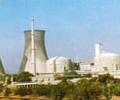
Sustained campaign forces NPCIL to issue statement on Kakrapar fuel leak. But there is still not clarity on what went wrong.

'This is the beginning of a big campaign which may last a hundred years of trying to understand the human body in detail.'

India, with its demonstrated capabilities of undertaking low cost high value inter-planetary travel, offers great opportunities for NASA to work with.

R S Sundar, the site director of KNPP, on how the plant is producing 1,000 MW of nuclear power, the largest in the country.

20 years ago this day, May 11, 1998, India conducted its second nuclear test at Pokharan in Rajasthan. In a fascinating interview on Rediff.com, K Subrahmanyam revealed how Indian PMs reacted to nuclear ambitions.
